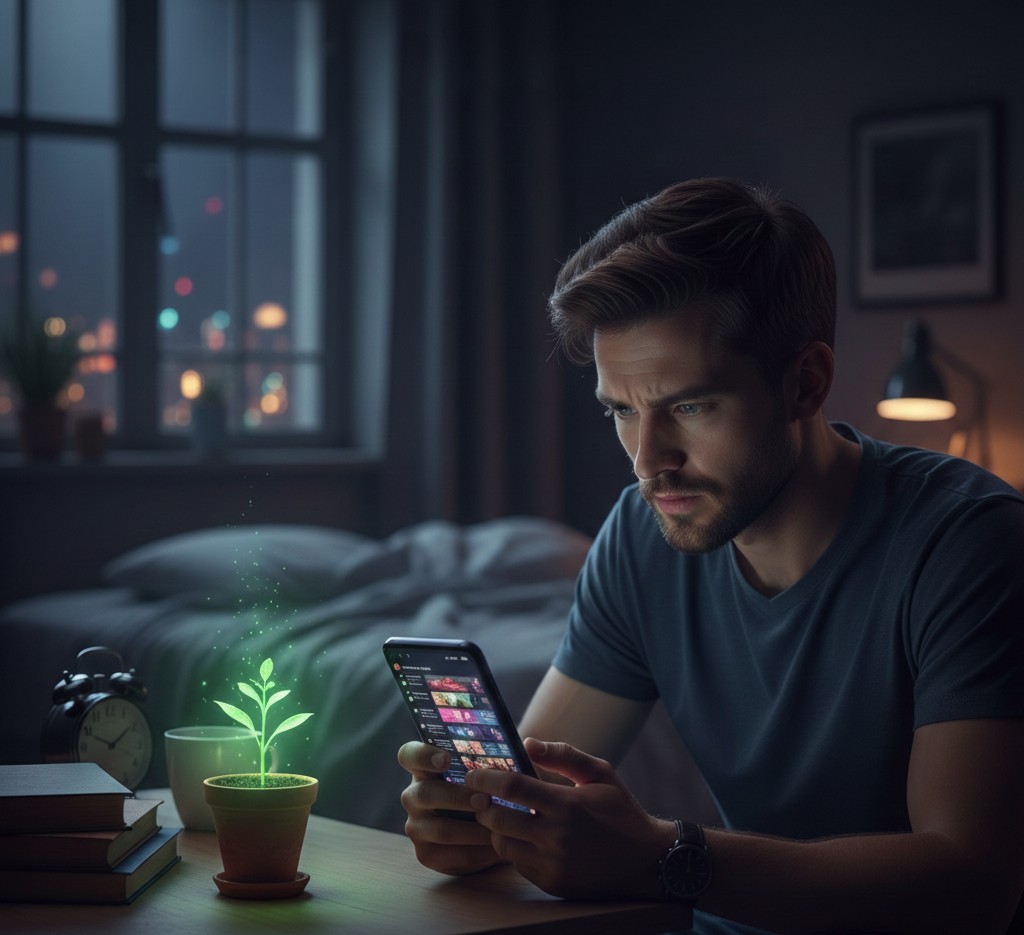
You open TikTok for one video. Maybe two. Suddenly it's 1:12 a.m., your eyes hurt, and you're asking the same question again: Why can't I get off TikTok or Reels?
You're not lazy. You're not weak. And this isn't a willpower problem.
This article explains why subconscious scrolling at night happens, why it feels impossible to stop doomscrolling, and what actually helps in real life. No guilt. No "just have discipline" advice.
Let's unpack what's really going on.
The Moment You Lose Control (And Don't Even Notice)
You probably know this moment.
You pick up your phone to check a message. Or the weather. Or one quick notification. Then you tap TikTok or Instagram "just for a minute."
Your brain checks out. Your thumb takes over.
This is what people mean when they talk about subconscious scrolling. You're technically awake. But your decisions are running on autopilot.
And once you're on autopilot, stopping doomscrolling feels weirdly hard.
Why?
Because the apps are designed for this exact moment.
Your Brain Loves Infinite Content
TikTok and Reels are engineered around one powerful idea: no stopping point.
Think about Netflix. Even Netflix asks, "Are you still watching?"
TikTok never asks.
It removes the natural pause your brain needs to regain control.
Instead, you get:
- Endless content
- Instant rewards
- No friction
- No decision points
Your brain doesn't need to choose the next video. It just appears.
This taps directly into the dopamine system that drives habit formation and addiction.
And once that loop starts, it's very hard to break phone addiction using willpower alone.
Why Willpower Fails at Night
Here's something most productivity advice ignores.
Your willpower is strongest in the morning.
By night, it's basically a melted ice cube.
After a full day of work, decisions, social interactions, and responsibilities, your brain is tired. This is called decision fatigue.
At night your brain wants two things:
- Low effort
- High reward
TikTok delivers both instantly.
That's why subconscious scrolling at night is so common. Your brain isn't trying to sabotage you. It's trying to rest.
It just picked a terrible way to do it.
Doomscrolling Is Emotional Regulation
This part surprises people.
Scrolling isn't just entertainment. It's emotional management.
You scroll when you feel:
- Overwhelmed
- Lonely
- Stressed
- Mentally exhausted
- Avoidant of tomorrow's tasks
Your brain reaches for the fastest mood changer available. Social media wins every time.
This is why quitting social media feels harder than quitting sugar or caffeine. You're not just breaking a habit. You're removing a coping tool.
That's why many people searching for social media addiction help feel stuck. They remove the habit but don't replace the emotional function.
And the brain always fills empty space.
The Hidden Loop Keeping You Stuck
Let's map the full loop.
Trigger: You feel tired or stressed.
Action: Open TikTok or Reels.
Reward: Quick dopamine and distraction.
Aftermath: Guilt and lost time.
Emotion: Stress increases.
Repeat.
This is classic habit loop behavior.
The problem is not motivation. The problem is the loop has zero friction.
Your phone makes scrolling the easiest action available at the worst possible moment.
Why "Just Delete the App" Rarely Works
You've probably tried a digital detox before.
Delete TikTok. Feel powerful. Last three days. Reinstall.
Sound familiar?
That happens because removing apps doesn't remove urges.
When the urge hits, your brain negotiates:
"I'll just reinstall it for a minute."
And suddenly you're back.
This is why most people searching for a cure for digital burnout bounce between extremes. Full restriction or full relapse.
Neither approach solves the root problem.
What Actually Helps Instead of Willpower
The real solution is friction.
Tiny barriers between impulse and action. Not punishment. Not restriction. Just enough pause to wake your brain up.
Because when your brain wakes up, you regain choice.
That's the key difference.
You don't need more discipline. You need more awareness.
This is where mindful app blocker tools and friction-based design start to help.
The Power of Friction (A Small Pause Changes Everything)
Imagine this scenario.
You tap TikTok. Instead of opening instantly, a short pause appears. Maybe a breath prompt. Maybe a question.
"Why are you opening this?"
Suddenly you're back in control.
This tiny interruption breaks the subconscious loop.
This approach is often called a friction-based app blocker or conscious scrolling tool. Instead of forcing you to stop, it helps you notice the decision.
That small shift changes everything.
Replace the Scroll, Don't Just Remove It
If you remove scrolling without replacing it, your brain rebels.
You need alternatives that provide:
- Rest
- Low effort
- Gentle dopamine
Here are simple replacements that actually work:
1. The Two-Minute Reset
When the urge to scroll hits, try:
- Drink water
- Stretch your shoulders
- Take five slow breaths
It sounds small. But it gives your nervous system the break it was seeking.
2. The "Boring First" Rule
Open something slightly boring first:
- Notes app
- Journal
- To-do list
This interrupts the instant dopamine spike.
3. Micro-Habits Instead of Big Changes
Huge lifestyle changes fail. Micro-habits stick.
Examples:
- One page of reading
- One stretch routine
- One quick brain dump
These tiny actions reduce the urge to procrastinate.
This is why many people looking for a stop procrastination app or self-control app end up succeeding with habit-based tools instead of strict blockers.
Why Gentle Tools Work Better Than Strict Ones
Hard blockers feel like punishment.
Gentle blockers feel like coaching.
And your brain reacts very differently to each.
A non-restrictive screen time app focuses on awareness, friction, and small habit building instead of total control.
This approach works especially well for people dealing with ADHD, burnout, or executive dysfunction.
Because the issue isn't laziness. It's friction and overwhelm.
Small Habits Beat Big Discipline
Think of this shift:
Old approach: "I need more discipline."
New approach: "I need better systems."
Small habits compound over time.
One fewer scrolling session per night equals:
- Better sleep
- More focus
- Less digital burnout
- More control over your attention
This is how people gradually break phone addiction without extreme detoxes.
A Realistic Way to Stop Doomscrolling
Let's make this simple.
You don't need to quit social media forever.
You don't need monk-level discipline.
You need:
- Awareness of subconscious scrolling
- Small friction before apps open
- Tiny replacement habits
- A system that supports you when you're tired
That's the real path forward.
Final Thoughts
If you've ever wondered, "Why can't I get off TikTok or Reels?", the answer isn't lack of willpower.
It's design, dopamine, and decision fatigue working together.
The solution is not fighting your brain.
It's working with it.
Add small pauses. Build tiny habits. Reduce friction in the right places.
And slowly, gently, you reclaim your attention.


%20And%20What%20Actually%20Helps)

